Focus on availability, preparedness, and operational competence
Risks in communities are changing and the types of emergencies firefighters respond to are increasingly varied. We constantly review and adapt our approach to ensure we have the right vehicles, equipment, skills, and technology to respond to different types of incidents quickly and competently. In 2026-27, fire engine availability, preparedness, and operational competence are the key priorities to ensure we continue to deliver the highest standards of emergency response.
We will:
· Review management structures to ensure arrangements support the key priorities and balance responsibilities, leading to closer contact between firefighters and leaders
· Empower firefighters to drive operational excellence through our new Operational Tactics Group, bringing together learning and best practice in structural firefighting and incident command.
Strengthen on-call fire engine availability
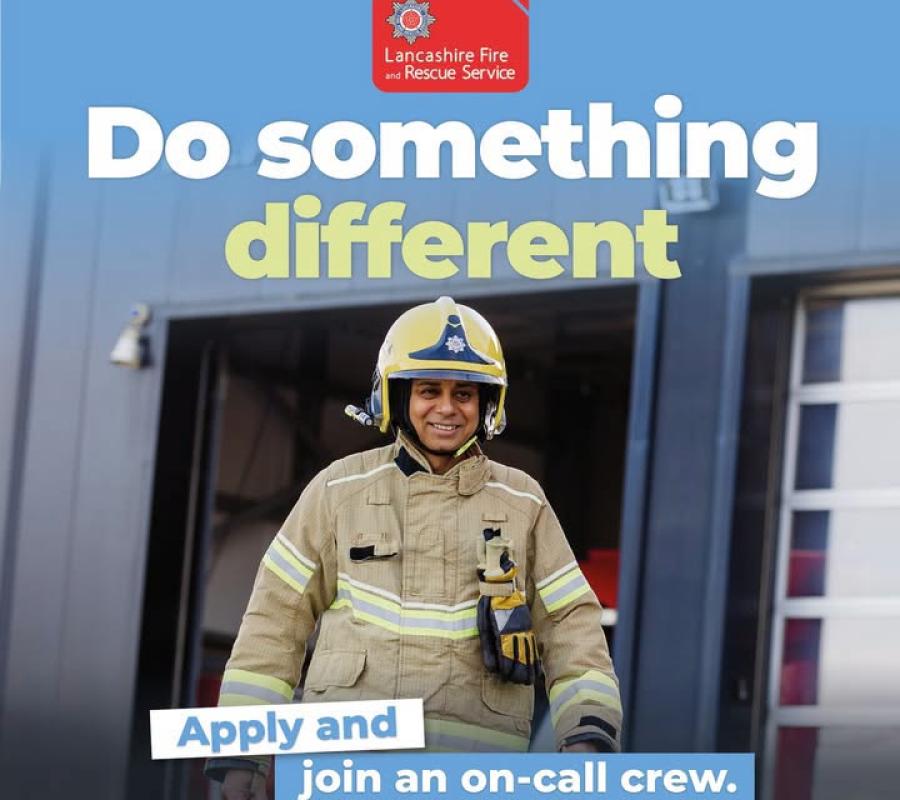
Lancashire has 32 fire engines crewed by on-call firefighters, who often have another job outside Lancashire Fire and Rescue Service. They live or work very close to the fire stations they operate from and respond to emergencies in their communities from home or work. We undertake continuous improvement to strengthen recruitment and retention of on-call firefighters and increase availability of on-call fire engines.
We will:
· Analyse national on-call research to identify opportunities and implement recommendations to improve the on-call model in our Service.
· Deliver revised pay arrangements for on-call firefighters that better reflect hours of cover and reward acquisition of key skills.
Review specialist resources
The Service has multiple specialist vehicles, equipment, and teams designed to firefight and rescue people from a wide range of emergencies. A detailed evaluation of these specialist resources will inform our future response requirements and asset replacement programmes.
We will:
· Review the risk, demand, types, numbers and locations of specialist vehicles, equipment and skills to ensure that we are well equipped to respond to community risks.
Invest in our fleet and equipment
The Service conducts extensive research and development to ensure we invest in vehicles that provide the most effective response to emergencies and increased firefighter safety. Our staff are actively involved in developing, trialling, and evaluating vehicles to ensure they meet operational needs.
We will:
· Introduce and evaluate a new welfare unit designed to improve welfare for firefighters on the incident ground.
· Procure and begin a trial of two smaller 4x4-type fire engines capable of off-road travel, which can give improved access to rural areas in the event of flooding or wildfires, in addition to being available to respond to all other incident types safely.
· Support the replacement of the mobilising system at North West Fire Control, expected in 2027, to ensure it is fit for the future, serves the needs of Lancashire’s communities, and provides value for money.
Lead drone modernisation in fire and rescue
As the national fire and rescue service lead for drones, the Service is a partner in a project to ensure emergency services are included in future changes to UK airspace. Modernisation includes using drones to take aerial imagery from the incident ground prior to arrival of fire engines, the ‘drone in a box’ concept which negates the need for a human operator, and heavy lifting drones. Our participation will keep us at the forefront of innovation, development, and operations.
We will:
· Participate in research and trials, host drone activity at our Leadership and Development Centre, and facilitate show and tell events to share learning and innovation.